
Writing as Resurrection
a conversation with Tracy Clark-Flory, author of My Mother's Daughter, on untold stories, missing our mothers, and the power of writing to bring someone back to life


Last night, I watched Hamnet, perhaps a strange thing to do on Mother’s Day. But perhaps not. If anything, it is a story about the anguish of motherhood. A story about how painful it can be to have made something from the cells of your body and yet have no control over it once it is born.
It is, at its heart, a story about loss.
But it is also a story about the power of creation. And specifically, the strange sorcery of writing.
Hamnet is a novelization about the death of the child of William Shakespeare. Shakespeare was not present when his son died of the plague. And his wife, Agnes, played beautifully by Jessie Buckley, is angry that he was away in London, writing and directing his plays, instead of at home, with her, watching in agony as their beloved child is taken from them.
Of course, her anger is warranted. We understand her anger, viscerally.
But then Shakespeare does something with his own grief. With his own powerlessness over what has happened to his beloved boy. In a way, he brings him back to life.
Yes, on the stage, in a play which he titled with his own son’s name, he wrestles not just with his grief, but he does the seemingly impossible. Agnes attends the play when she sees her husband has taken her dead son’s name and plastered it on bulletins. She feels betrayed. How could he have used the loss of his child to make money, to entertain people?
She sneaks into the theatre without Shakespeare knowing. And then is astonished when she begins to understand. There is Hamnet on the stage. There he is, even with his same mannerisms, his same vocal inflection. Her heart catches in her throat. It is like she is seeing a ghost.
I read the book before watching the movie, so I understood some nuances that were missing in the film, but so much of Agnes’s grief has been about where her dear son went. Where did he go? Where can she find him? How could he have just disappeared? She would do anything for just one more glimpse of him.
Now she understands her husband has the same questions. And has solved them by writing this play. Because here stands Hamnet. She gets, just for a moment, to be with him again.
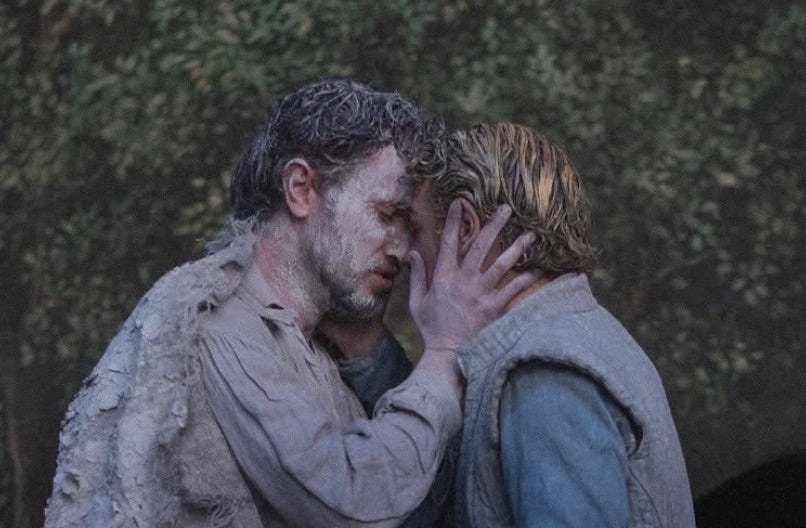
Shakespeare also gets to say goodbye to his son in the play in the way he was not able to in reality. Shakespeare plays Hamnet’s dead father on the stage. He plays a ghost, who after his death, goes to find his son and say the goodbye he was never afforded.
Now, nightly, their son’s death is witnessed. Agnes and Shakespeare are no longer alone in their pain. It is shared. In the climax of the film, as Hamnet is dying on stage, Agnes reaches out her hand. As if to tell her son, Mama is still with you. You are not alone. And then others in the audience do it as well. They all reach out their hands to him. We are with you. We see you. You are not alone as you face death.
It touched me not just as a mother, but as a writer. At the amazing power we have to bring our loved ones back to life. No, it is perhaps not in the way we want, in flesh and blood. But it is better than nothing.
And while all of this might seem like a tangent, and not at all related to Tracy Clark-Flory’s stunning memoir about the half-sister her mother put up for adoption before Tracy was born, you would be wrong.
I’m lucky to know Tracy personally. She lives out here in the Bay Area and is the genius behind Dire Straights alongside my good friend Amanda Montei. We’ve met up for dinners and tarot readings, book launches and movies. I love her writing and perspective. So I knew I would want to cover her new book.
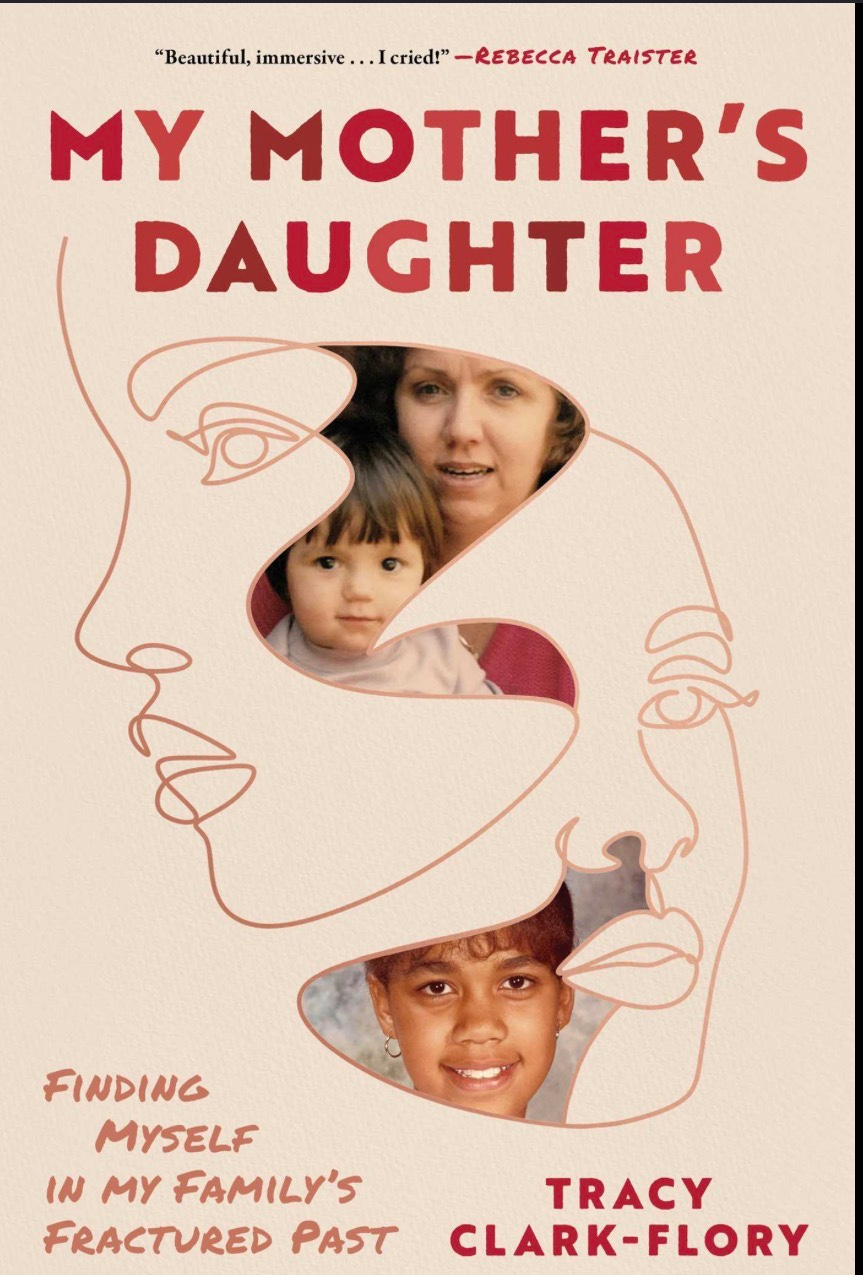
While My Mother’s Daughter is about Tracy finding the daughter her mother was forced to give up for adoption before Tracy was born, the heart of the story for me was about Tracy’s longing for her mom.
Tracy’s mother died of cancer a decade ago. She was never able to meet the daughter she placed up for adoption. She was sent to a home for unwed mothers, sequestered away, and then her daughter was taken from her. This loss plagued Tracy’s mom throughout her life. In turn, it plagued Tracy.
Before I read this book, I read Tracy’s first book, Want Me: A Sex Writer’s Journey into the Heart of Desire, and I remember being so glad I had this next book to read. Because Tracy’s mom and her death are central in Want Me. This adoption story comes up briefly, but you can tell, even in the pages of that book published in 2021, that there is so much more to unpack. So much more to uncover. I also knew that this was a way for Tracy to keep her mom close. To write her on the page was a way to reanimate her.
Let me just name that I connected with this book in a special way because I too lost a parent way too young to cancer. My dad was just 55 when he passed away. I was four days shy of 20. That loss defined me for a good decade. It was like no one could understand who I was unless they understood that I’d lost my dad at such a tender age.
I feel this parent loss also defines Tracy. Not just as a woman but as a mother who never got to mother in the presence of her mother. I feel her longing for her mother on every page of this book. Her grief. Her sadness at all she cannot ask. Because her mother is gone. There are so many unanswered questions in the pages of this book. She does what she can and puts her journalistic skills to great use. And yet, there are some things that are unknowable because her mother, Deb, is gone. Even Tracy’s dad doesn’t know the details of this phase of his wife’s life.
That gaping hole where a person once was. When they die, they take their secrets with them.
This book is a way for Tracy to still communicate with her mom, connecting with her even after her death. When Tracy goes sleuthing to discover when this unplanned pregnancy happened in her mother’s college career, she requests a transcript of her grades from that semester and receives a paper copy in the mail. “What a treat to receive a new piece of my mom almost a decade after her death,“ she writes. She has no idea how much more she is about to receive.
When she meets her sister Kathy for the first time, there is her mom.
“Looking into her eyes as she spoke, I felt a chill shoot through me. I saw my mother’s eyes. I felt her looking at me - really looking at me - for the first time since she died. The moment passed, and Kathy was Kathy again, but I was left with the feeling of having summoned a ghost.”
I’m so grateful Tracy took the time to answer some questions the week before her book went on-sale on what this writing experience was like. You can order the book here, follow Tracy on Instagram here, and subscribe to her Substack here.
Cindy DiTiberio: Tracy, there was a point in this book when I literally wrote in the margins: I love your mom. It was when you wrote about her giving your father a two-page handwritten letter “that read like a treatise on the potentials of sex outside of romantic love.” Are there times when you felt like your mom was the best character ever, like you could not have created a more unusual, flawed, tragic, thoughtful, wise, funny character?
Tracy Clark-Flory: Oh for sure! She was one-of-a-kind. Maybe when you grow up with such “characters,” it’s inevitable that you’re drawn toward writing—and memoir, especially. It strikes me in hearing your response to her that this is one of those surreal gifts of publishing a book: I get to share my mom with the world. Her influence lives on in a way she never imagined.
With my first book, there was a key scene where she gave me some loving advice in a difficult moment—and I heard from so many readers that they found her words helpful and even healing. I found it remarkable that her mothering could proliferate in that way, and long after she was gone.
With this book, I hope that what I’ve been able to capture of her will be another kind of proliferation. I would be so delighted if the full complexity of her identity—especially as a woman who so often went counter to “proper” feminine expectations—gives readers a sense of acceptance, confidence, and even pride in their own inner complexity, contradiction, and “improperness.” That is a gift that she helped to give me—what a wild thing to imagine that spreading outward.
Good Lord do I love a book title that works on multiple levels. Obviously the book is about discovering and reuniting with Kathy, who was your mother’s daughter. But there was a line, on page 159, when you are reflecting on what you inherited from your mom, and yes it includes feeling potentially “unusual” for a woman in terms of your interest in sex, and you write: “I was my mother’s daughter.” And it just brought tears to my eyes. The poetry of it. The resonance. Tell me what it was like to write this book and truly make so many connections about your psychic connection with your mom and how your life and life’s work has bisected with her story and her shame?
OK, want a fun behind-the-scenes-of-publishing fact? The book title was changed late in the game, right after we started considering cover designs. The title was initially A Woman Like That. It was intended to convey the sense of shame directed at unwed mothers in my mom’s era—they were “bad girls,” right? That title also had multiple levels of meaning, namely in that it gestured toward my own sense of identification with my mom as an “unusual” woman. But as the cover designs were mocked up, it came off as inspirational and even Hallmark-esque—as though I was saying, “Isn’t my mom an incredible woman?” The darkness, the shame, did not come across, in part because we weren’t leading with imagery that conveyed that emotional tenor.
So, in a frenzy, I drafted new titles, which was terrifying so late in the game, but I am incredibly relieved that we did. My Mother’s Daughter is meant to hit in exactly the ways that it hit you. I found an additional layer of meaning after choosing the new title and sharing the manuscript with my sister Kathy. I had already told her so much about our mom, but the book was this much deeper narrative dive—and one of the first things Kathy told me after reading it, and without even intending to reference the book’s title, was something along the lines of, “Wow, I really am my mother’s daughter,” because she had found all of these incredible similarities between the two of them.
As for making connections between my life and my mom’s past: that really happened as I started to dig into the history of these homes. I learned that my mom was one of over 1.5 million women who were sent away in the pre-Roe era. I had previously understood the adoption as the result of a difficult personal choice, but I quickly came to see that my mom had actually been pulled into a racist and sexist system designed to punish unwed mothers for their unmarried sexuality and re-route them toward marriage. These homes were supposed to give these women another shot at becoming “proper” women, wives and mothers—but first, they had to give their babies away. These adoptions were often coerced, if not outright forced, and many of these women were left grieving and traumatized.
As I was reading through these histories, I found myself physically reacting to some of the slurs that were hurled at unwed mothers in that era—“promiscuous,” “slut,” “whore.” I felt this warm wash of heat—the fire of shame. It instantly connected me to my prior experience as a journalist covering the sex beat—and as a personal essayist writing about my sex life on the internet—of being called vile names by misogynistic internet trolls. It was just the start of me seeing how my mom’s past had shaped who I became. She had been sent away in shame and, in so many ways, I had turned shame into my career.
It made me feel closer to her than ever before to develop this whole new understanding of the forces that shaped the both of us. That has been one remarkable thing about this experience—the ability to know her more deeply even though she is gone.
I quickly came to see that my mom had actually been pulled into a racist and sexist system designed to punish unwed mothers for their unmarried sexuality and re-route them toward marriage.
You write so beautifully about what it is like to experience this reunion and new extended family and yet also feel devastated that you get to be there, and your mom doesn’t. It is a new layer of grief, and you feel such responsibility, like you had to hold and contain and experience all this for your mom when it should have been her meeting her daughter, and grandsons, and great-grandchildren. Like you were her surrogate. I cannot imagine what it must have felt like to hold all of that in your body. What does it feel like now that you are a few years out, and you’ve created this book, this testament to your mother and this story and this lineage that now exists? Are those feelings still so conflicted?
I feel much less conflicted now that I’m a few years out. During my first visit to Atlanta to meet Kathy and her extended family, I had this sense that I had found my mom again in the world, but also that I had somehow lost her, again. My mom had three biological grandkids, and seven great-grandkids, but they were not actually hers. Because of the adoption, they had grown up without knowing her. So, grief arrived alongside my delight.
Just recently, Kathy came out to visit me in the Bay Area so that she could be here for my book launch. That experience was quite different, largely because my relationship with Kathy has had time to develop and deepen. I’ve also been able to build a relationship with her kids and grandkids. So, while it remains true that my mom never got to build a relationship with these biological family members, it’s also true that I am currently getting to do exactly that, which feels like a ridiculous gift.
It’s different for Kathy. As she learns more and more about our mom, including through the book, she is discovering more avenues of grief. Interestingly, I think that our grief has been staggered in such a way that one of us has always been standing on more solid ground, which aids our ability to support each other.
This book is also a commentary on the funneling of women into the nuclear family, of making them proper wives and mothers, forcing them into roles and systems that oppress them. You tell the story of your grandmother who was unhappily married and, on her deathbed, described her marriage as “a deal with the devil.”
“My grandmother played by the rules and was punished for it; my mom broke the rules and was punished for it. The real lesson in these maternal parables: There is no way to win in a system rigged for oppression, only different ways to lose.”
You write about how conflicted you feel to be happy in your marriage which you recognize is such a “foundational system of women’s oppression.” What was it like to look back at your family’s history and how does it make you think about today’s climate of Roe v. Wade being overturned, women questioning the decision to partner with men, and the choices we make as women to retain our agency in a world so intent on denying it?
Looking into the histories of these homes really underscored the fallibility of “choice,” because even when there wasn’t outright force, these adoptions were often coerced. There are so many ways that we are strong-armed into marriage and the nuclear family. So many of our “choices” in this regard are actually decisions that have already been made for us—whether it’s the primacy of single-family homes, which help to shuttle us into nuclear family units, or the shame and economic precarity that is heaped on single mothers.
Throughout writing this book, I’ve really paused to consider which choices were pre-determined for me, in ways big and small. That broader systemic understanding—once you see it, you kind of can’t unsee it, right? I think it’s important to engage in this kind of personal interrogation—maybe even to consider what alternate choices or experiments you want to engage in—without then pressuring oneself to somehow individually navigate your way entirely out of these systems. As if one could! Where I’ve landed is on the importance of recognizing and naming and endlessly interrogating the larger system, as well as our shared predicament within it.
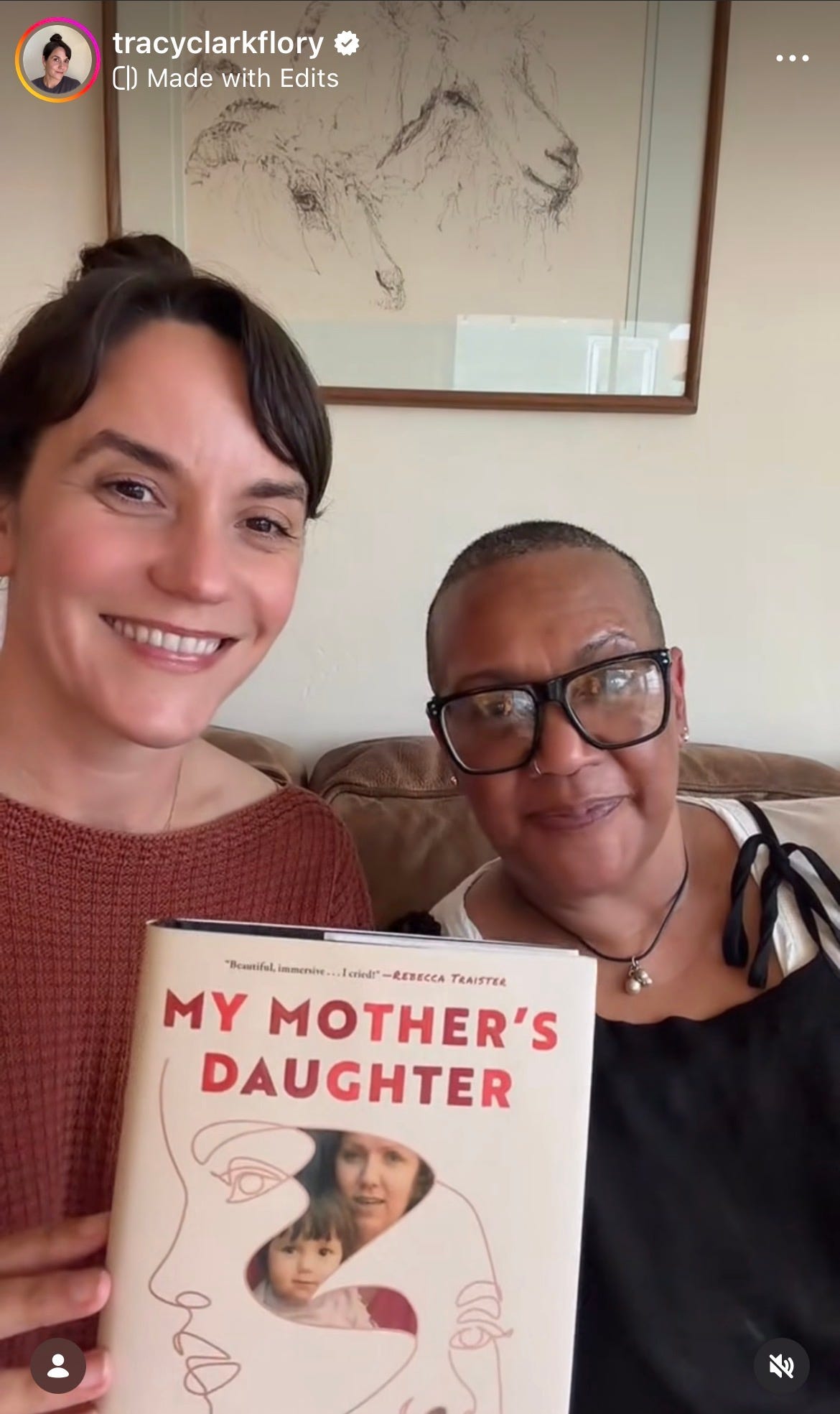
Finally, this is your story, but it is also very much Kathy’s story. Her face is now literally on the cover of the book. How did you approach her when you determined you wanted to write this and what was her involvement like throughout the process?
I was really clear from the get that I would never write this book unless Kathy was enthusiastically on board. Not just OK with it, but into it. Our relationship was No. 1 for me. Early on, I started to think that this might be a book, but Kathy was the first to mention the idea. As our story started to unfold in wild and unpredictable ways—including our finding her biological father who had never been told of her existence—she said something along the lines of, “This is a book. Tracy, you have to write this book.” And I told her: “I agree!” But I also asked her how she would feel about me telling a story that was also hers. She was really clear: “I’m not a writer, but you are. You have to tell this story.”
Liking this post, restacking it, or leaving a comment helps it find more readers. And if you consistently find value in the writings on The Mother Lode, become a paid subscriber. Your financial contribution helps me do this work and signals its value. It also grants you access to all content on The Mother Lode including more personal posts like my first foray into post-divorce dating, my own Divorce Diary, as well as paid subscriber series such as The Divorce Diaries and my five-part series Things I Wished I Known Before Going Through a Divorce.
Did you know you can gift a paid subscription to The Mother Lode? If you have a friend going through a divorce, give them access to all my material for just $7/month or $70/year!
RELATED:
In case you missed it, last Mother’s Day I featured an interview with Jill Bialosky on writing about her mother in The End Is the Beginning.
Women Talking: Mothering Our Mothers

So often Mother’s Day is centered around the mother who is actively mothering, the one who is in the trenches of the day in, day out raising of a child. But today, we’re going to reflect about our re…
And a few years ago, I wrote about what we really want for Mother’s Day (and FYI it’s not cards):

 | A guest post by
|